
Dave Sternberg
LSA was founded before businesses began scrambling for URLs and social media handles to own. Certainly much has changed in our sector across my 30-years of consulting work.
One thing seems to remain a constant however: board chairs and CEOs want a board that is more “engaged.” Without exploring what they mean by “engagement,” board chairs and CEOs are working hard but staying in the same frustrating place.
Is engagement more activity? Is it better meeting attendance? Is there a fraction of the board that is checked out but we’re conflating that with everyone being disengaged? Maybe the board is experiencing the 80/20 rule and a few rockstars are keeping the momentum going for everyone?

You can see how poorly defined engagement indicators easily lead to unmet engagement goals. But this is a persistent and common problem across organizations of all sizes. Over the years I have become numb to the word engagement. I know what the word means, I just don’t believe it can be universally applied to every board member, on every board, and in every situation. And when we do try to apply it universally, the result is predictably underwhelming.
Engagement as a Spectrum
This idea that engagement can’t be universally applied doesn’t mean there’s a free pass for boards to underperform. Instead, this is an invitation to look at engagement from a different perspective. Instead of applying engagement as a rigid list of expectations, organizations see more success when they view engagement as a spectrum of opportunities where board members consistently and sustainably work on a variety of tasks. These tasks range from simple to progressively more difficult and allow board members to contribute at whatever levels are sustainable. This method also allows boards to scale up (and scale back) individual board member involvement as needs and priorities shift.
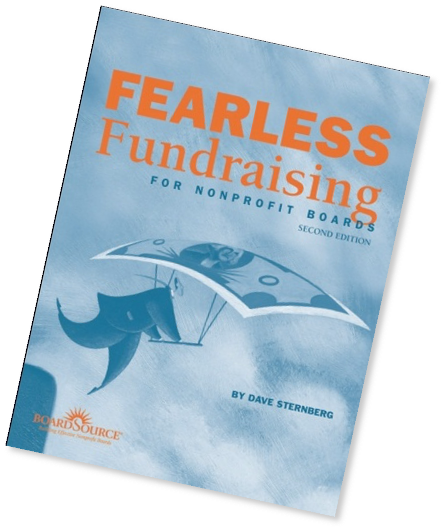
In 2008, when I wrote the second edition of Fearless Fundraising for Nonprofit Boards for BoardSource we enhanced the final appendix and offered a series of small things that board members could individually commit to in the form of a “Board Member Engagement List.” Conceptually it is about easing into the work in a meaningful way. Small wins add up, more actions take place and more “engagement” takes place. Each board member is choosing what they are comfortable with, not being directed or told by staff.
Engagement Doesn’t Happen Without Willingness
When we talk about engagement, we often avoid a critical question: do board members have a desire to engage? Are they willing? Without the willingness to engage, the likelihood of success is low.
That’s why I think about willingness as an essential part of engagement. Willgagement, if you will.
I’m still waiting for the term to take off (perhaps it’s a stretch). In the meantime, you can save a copy of an updated “Board Member Engagement List” from Fearless Fundraising for Nonprofit Boards. Make it your own and use it to support board engagement – whatever the term looks like in action for your organization.