Featuring: Ben Davis, President
The Challenge
Madison County Community Foundation (MCCF) hadn’t put together a real strategic plan in about 12 years, and even that one was built mainly to satisfy a funding requirement rather than to guide the organization. When Ben Davis stepped into the role of president four years ago, he found a foundation that needed an energy boost. In the years since that last plan, almost everything had changed: COVID-19 happened, the foundation relocated, funded partners and donors turned over, and most of the board turned over too.
MCCF needed a plan that reflected who they were now, and the timing was tight. The foundation was wrapping up a major gift campaign and searching for a new investment advisor. In the middle of all that, Ben and the board wanted a plan built on real community input, not just staff and board opinion. “We knew where we needed to go, but we needed a real, current plan to get there, not another expensive binder that sits on a shelf,” Ben said.
Why LSA?
MCCF needed support for its strategic plan, but a one-size-fits all consultant wasn’t what they needed. Instead, the board focused on:
- Right-Sized Scope: MCCF didn’t need to start from scratch and rediscover its identity; they already knew who they were and what impact looked like for them. What they needed was the clearest path from where they stood to where they wanted to be, and LSA built the scope, budget, and timeline around exactly that.
- A Rigorous Selection Process: MCCF invited three firms with existing relationships and track records, including LSA, to submit proposals and interview. The decision to hire LSA was unanimous among the board, its planning committee, and staff.
- Shared Philosophy: LSA’s approach aligned with a saying MCCF already lived by internally: “If you want money, ask for opinions.” LSA understood that everyone the foundation works with, including its funded nonprofit partners, is a potential donor whose voice belonged in the plan.
- Deep Sector Expertise: LSA knew Lilly Endowment’s GIFT initiative inside and out, including how it plays out for Indiana community foundations. That meant they could build a plan flexible enough to absorb a future funding round without letting it take over the foundation’s focus.
“Because of who LSA is, and because they understood our needs so well, we ended up with a scope of work that probably didn’t look like any strategic plan process they’d run before, even though they’ve done a lot of them,” Ben said.
The Approach
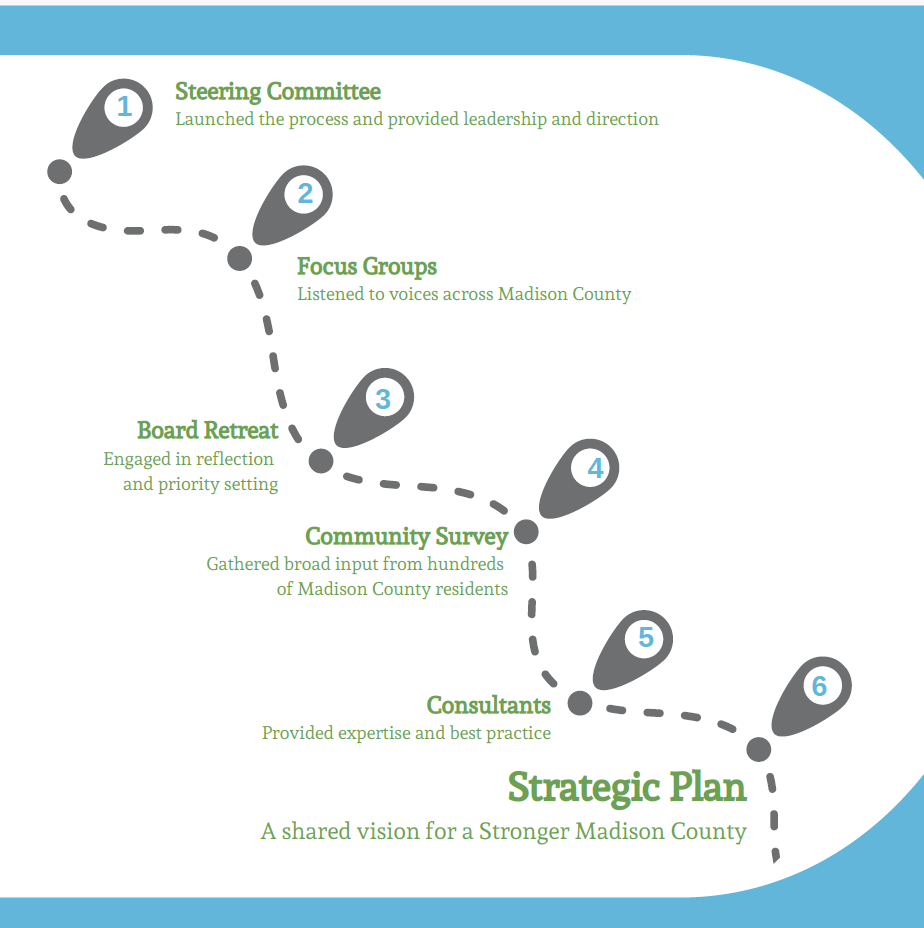
LSA opened the engagement at a board meeting with a detailed Gantt chart laying out every phase of the process. From there, the work centered on stakeholder engagement: a community-wide survey, stakeholder interviews, and focus groups with MCCF’s funded partner agencies, including conversations held over coffee with the nonprofits the foundation supports.
LSA asked MCCF’s own staff and board to step out of the focus groups entirely, staying only long enough to set the stage before leaving the room. That way, participants could speak freely without worrying about how leadership would take what they said.
The process wrapped up with a full-day board and staff retreat, where LSA pulled everything they’d gathered into a plan the board could call its own. “They laid out the timeline for every step and met every single deadline. I never had to follow up or wonder where things stood,” Ben said.
A “Wow” Moment
For Ben, the standout moment was the board and staff retreat itself, held on Cinco de Mayo. Every single board member showed up in person for the full-day session, a turnout Ben hadn’t seen even at the best strategic planning retreats of his career. LSA’s facilitation left the board feeling like the plan was truly theirs.
“It was, hands down, the best board and staff retreat I’ve been part of. The board came out of it with complete ownership of the plan,” Ben said. The day was both productive and festive, further cementing their efforts.
The Results
MCCF adopted its first strategic plan in about 12 years, unanimously approved by the board and put to real use. Built around a clear mission, vision, and four strategic goals, Grow, Invest, Convene, and Strengthen, the 2026–2028 plan gave the foundation a framework it needed.
That framework was tested almost immediately. Just a month or two after adoption, Lilly Endowment announced its GIFT IX round, far sooner than MCCF had anticipated. Because the plan had enough flexibility built in to prioritize new opportunities instead of chasing them, the foundation absorbed GIFT IX without losing sight of its broader goals.
For Ben, it’s become a real decision-making tool. When he brings a new idea to staff or the board, the first question is always: is this in the plan? That discipline saves time and keeps the team focused, while still leaving room to chase new opportunities.
Its flexibility also supported a concrete staffing decision. Instead of locking in a rigid timeline for adding development capacity, the plan left room to grow into it, giving MCCF the confidence to bring on a part-time, contract development advisor already helping raise amounts beyond the cost of the contract.
“We believe in this plan enough that we’ll say yes or no to a good idea based on whether it fits. That’s exactly what we needed,” Ben said.
Final Thoughts + Impact
Asked what he’d tell another Indiana community foundation weighing outside facilitation, Ben points to something he didn’t expect going in: even an experienced nonprofit leader can’t step far enough outside their own process to get honest, unbiased input from stakeholders.
“You just can’t get all the unbiased, unvarnished perspective you need if you’re the one running the process,” Ben said. “Whether you recognize it or not, your presence in the room changes what people are willing to say.”
About the Organization
Since 1992, Madison County Community Foundation has partnered with individuals, families, businesses, and nonprofits to invest in the future of Madison County, Indiana. Guided by its mission to invest in positive change that elevates and strengthens the county, MCCF supports the community through grantmaking, scholarships, and philanthropic partnerships across arts and culture, education, health, human services, and civic affairs.
Learn more at madisonccf.org.