
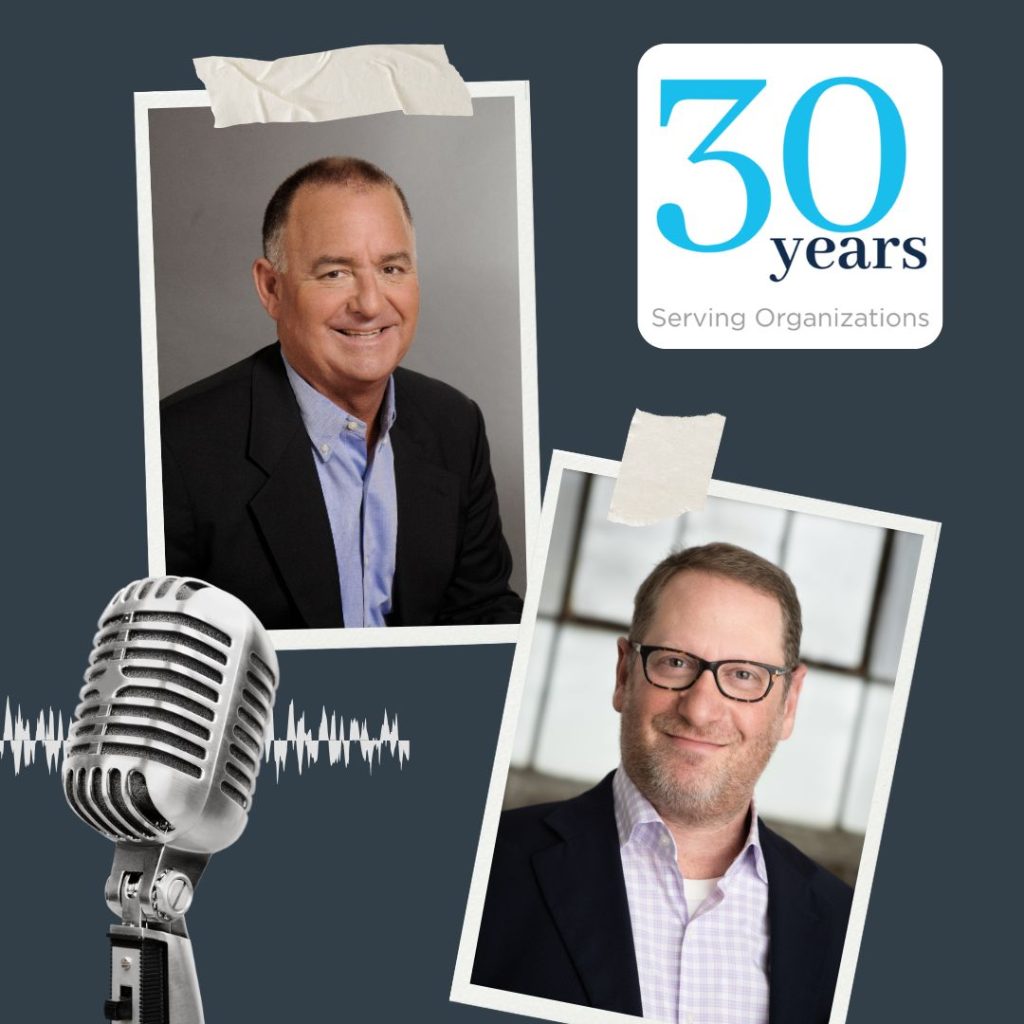
Loring Sternberg & Associates launched in 1996—before the firm had a website, before anyone was on social media, and long before a client meeting could happen over Zoom. What we started with was the same recipe we’d use to succeed today. Thirty years after opening our doors, we spoke with our founding team members, Chuck Loring, CFRE and Dave Sternberg, CFRM about where the firm started, what they’ve learned, and what they think is coming next.
What problem were you trying to solve when you started LSA?
“We never had a client with a fundraising problem,” Dave said. “They all had governance problems.” Small and mid-sized nonprofits were struggling with disengaged boards, unclear leadership roles, and organizational dynamics that made sustainable growth nearly impossible. Chuck had been consulting with BoardSource and was already deep into governance work by the time they launched. “We started working with boards of directors, not just development directors,” he said. “That was really the emphasis when we first started.”
What did those first years look like behind the scenes?
“You go back to 1996, 1996, and people didn’t have a website; there was no Zoom—it was word of mouth,” Dave said. “You had to have a pretty good network and be seen as someone who brought value.” Both founders had served as consecutive presidents of Indiana’s Association of Fundraising Professionals (AFP) chapter—back when it was a single statewide organization of 500 people with popular monthly luncheons. Chuck noted that the personal time investment in that community made a real difference. “People were really tight because they weren’t spending time on Facebook—they spent time with each other.”
The firm’s reputation rested on one consistent practice: telling clients what they needed to hear, even when that wasn’t comfortable. “Every client was either a return client or a referral,” Chuck said. “I never had a LinkedIn profile. No social media. It was all word of mouth.”
How has the firm evolved over the years?
The firm evolved organically and often in response to what clients were asking for. A surge in demand for capital campaign support around 2008—counterintuitive timing, given the recession—led the firm to expand in that direction. Strategic planning and organizational assessments became core offerings alongside governance work.
LSA chose not to specialize by sector, and because of this decision it has held up well. “Dysfunction is an equal opportunity problem,” Dave said. While other firms focused exclusively on hospitals, or Catholic schools, or arts organizations, LSA worked across the board. “We thought we would serve clients better by working sector-wide and understanding the issues throughout the sector.” Understanding how challenges play out across the whole sector, they found, made them better consultants to any one part of it.
What’s one mistake that taught you the most?
Underestimating the scope is a mistake with a lot of opportunity to learn. More than once, the firm took on a client engagement and came out the other side having invested far more time than we anticipated. “When you added it all up, it was essentially charity work,” Dave said. The lesson was partly about doing more due diligence before saying yes, but also, they acknowledged, a reflection of caring more about client outcomes than margins. “If our clients are better as a result of working with us, then we succeeded. Everything else doesn’t matter as much,” Dave added.
What trends concern you most for the sector?
Reduced federal support is at the top of the list, and both founders expect it to accelerate organizational consolidation—some of which, they noted, may be overdue. But the longer-term worry is the narrowing base of philanthropic participation.
“The trend has been fewer donors every year, but more dollars—which means the average gift keeps increasing,” Chuck said. “More and more philanthropy depends on fewer and fewer wealthy people, and I don’t think that’s good. When a theater is counting on a handful of wealthy donors, those donors start to control decisions.”
Chuck pointed to the institutions that historically broadened giving as a key part of the problem. “The greatest teachers of philanthropy were the church, the United Way, and the family. Church attendance goes down every year. Fewer people work for companies with United Way campaigns. That’s a structural problem.” Dave sees data and donor engagement strategy as a potential counterweight. “How organizations engage with the next generation of donors is super important. The nonprofit sector needs to look at its data in a way that can help inform how it’s interacting with that next generation. That could change the tide.”
Technology continues to grow and evolve at a rapid pace. As we speak, AI is becoming more proficient and efficient. Who knows what long-term impact that has on our sector.
What’s next for LSA?
The intergenerational wealth transfer is the area both founders are watching most closely—both for what it means for their clients and for a potential new direction for the firm.
“We see more and more philanthropists tell us through our campaign work that they’re not confident or comfortable—they don’t really have a good understanding of how to be a philanthropist,” Dave said. “There might be an opportunity for Loring Sternberg to create an advisory practice segmented from our other work.” As wealth becomes more concentrated, he sees real demand for qualified guidance on the giving side of the equation. “I think there could be a whole industry of philanthropic advisors working with these people to make sure they’re giving thoughtfully and effectively.”